

Download Level 1st, 2nd, 3rd, 4th
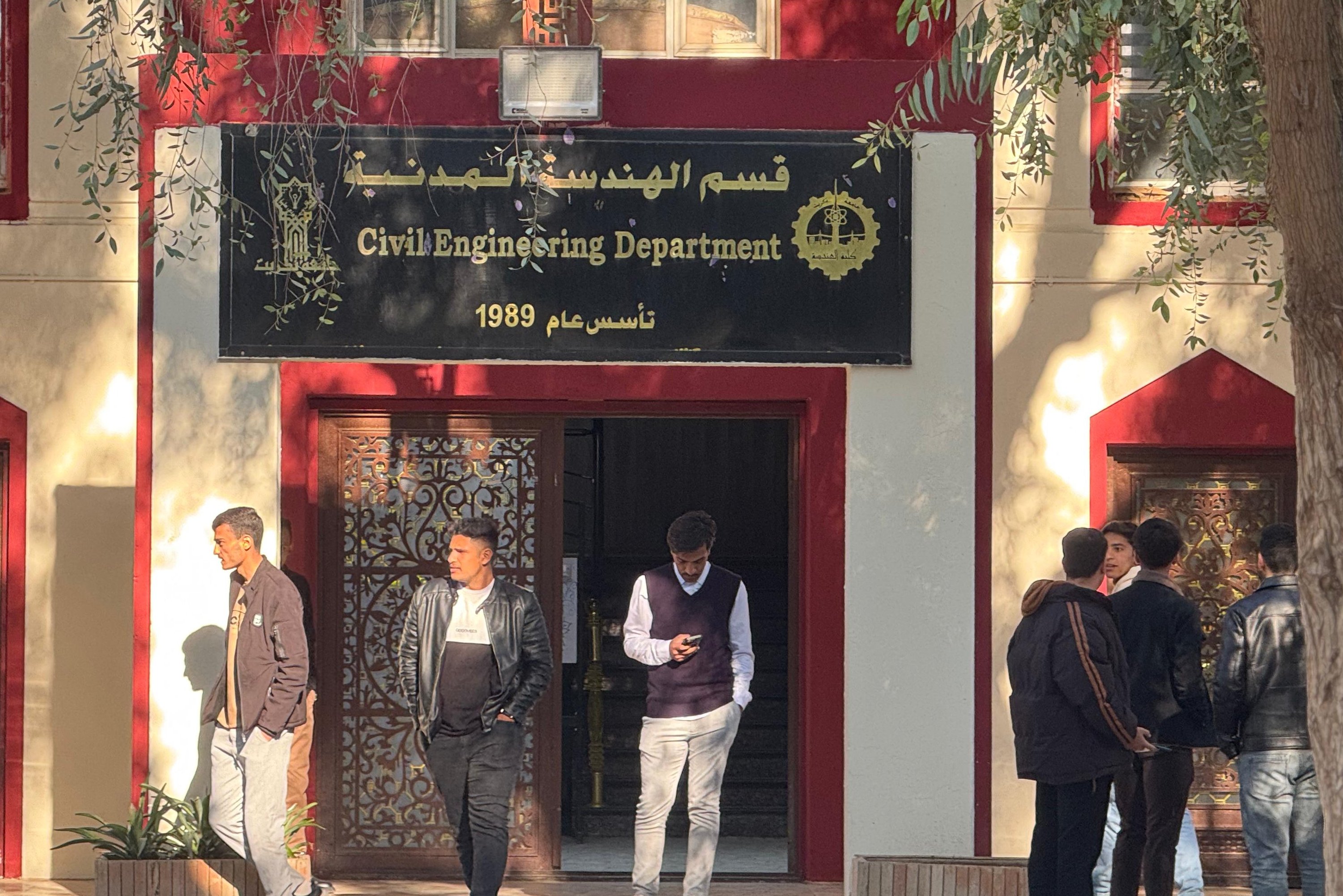
Civil Engineering Department
The department aims to graduate highly qualified professionals in the field of civil engineering who contribute to the development of urban planning, roads, water resources, and infrastructure. Since its establishment, the Civil Engineering Department has expanded its buildings, laboratories, and student body. This expansion has included the development of its curricula and the expansion of its postgraduate programs to include higher diplomas, master's degrees, and doctorates, as well as an increasing number of admitted students.
Both undergraduate and postgraduate studies in the department are distinguished by their adherence to a rigorous scientific methodology in developing study plans and providing students with the latest advancements in their field. The department's faculty has also focused on transferring expertise from the university to practical applications and vice versa. The Civil Engineering Department has played a leading role in scientific research, earning several awards and accolades at the university level. The department is committed to engaging annually with research plans developed by various government departments and ministries. For more information about the curriculum,
The Master's program in Civil Engineering was launched in 1993. A large number of graduates have completed their studies, some working within the department and others at other universities and institutions. The Higher Diploma program was introduced in 2012, and the PhD program was established in 2013 after the department met all the necessary requirements.
In the field of engineering consulting and leveraging the extensive research and academic expertise of the department's faculty, a framework for collaboration with relevant government departments has been established. This framework facilitates the exchange of expertise through the Engineering Consulting Office, as well as through the exchange of knowledge with other universities and government departments in the same field, and through the Construction Materials Testing Laboratory.
The department’s strategy in teaching and learning lies in the existence of the research plan, which is implemented by the professors, and working to prepare the student and refine his skills in accordance with the requirements of engineering work, so that he may be a successful engineer in terms of accuracy, speed of completion, and honesty in work, as well as by encouraging students to adhere to the nature of the work and the ethics of society and the university through educational guidance committees to achieve the scientific and educational goal.
إعداد مهندسين مدنيين يمتلكون المعرفة والمهارات والعقلية الابتكارية لمعالجة التحديات المجتمعية والبيئية، وتطوير البنى التحتية، والمساهمة في تقدم الصناعة من خلال البحوث التطبيقيه والتعلم المستمر.
Vision:
To prepare civil engineers with the knowledge, skills, and innovative mindset to address societal and environmental challenges, advance infrastructure development, and contribute to industry through applied research and lifelong learning.
تتمثل رسالة قسم الهندسة المدنية في توفير تعليم عالي الجودة يجمع بين النظرية والتطبيق، ويؤهل الخريجين لمهن ناجحة في العراق وخارجه. كما يسعى القسم إلى تعزيز الابتكار والبحث التطبيقي في مجال الهندسة المدنية، وتشجيع الحلول المستدامة للتحديات الإنشائية بما يتناغم مع اخلاقيات المهنة، واستقطاب الطلبة المتميزين محلياً ودولياً، وبناء روابط قوية مع الخريجين والصناعة والمؤسسات المهنية.
Mission
The mission of the Civil Engineering Department is to provide high-quality education that combines theory with practice, preparing graduates for successful careers in Iraq and beyond. We aim to foster innovation and applied research in civil engineering, promote ethical and sustainable solutions to infrastructure challenges, attract and support diverse students, and build strong connections with alumni, industry, and professional organizations.
1. إعداد مهندسين مدنيين أكفاء يمتلكون المعرفة التقنية الحديثة، والقدرة على حل المشكلات، والالتزام بالقيم الأخلاقية.
2. تحديث المناهج بشكل مستمر من خلال دمج التقنيات الحديثة (مثل الـBIM، الذكاء الاصطناعي، وأدوات الاستدامة) وبما يتوافق مع معايير الاعتماد الأكاديمي الدولية ( ABET، ESG)
3. تعزيز المختبرات والقاعات الدراسية وفرص التدريب الميداني لتمكين الطلبة من التعليم التطبيقي والبحث العلمي.
4. زيادة مساهمة التدريسيين والطلبة في البحث التطبيقي والنشر في المجلات العلمية الرصينة ذات السمعة العالمية.
5. تعزيز الممارسات المستدامة في الهندسة المدنية من خلال استخدام مصادر الطاقة المتجددة والمواد الإنشائية الصديقة للبيئة واستراتيجيات تقليل الانبعاثات الكربونية.
6. بناء شبكات قوية مع الخريجين والقطاع الصناعي والبلديات والجهات الحكومية لدعم فرص التوظيف وتعزيز الأثر المجتمعي للهندسة المدنية.
7. ترسيخ ثقافة التعلم مدى الحياة وتشجيع الخريجين على مواصلة الدراسات العليا والتطور المهني المستمر.
Objectives:
1. Develop competent civil engineers equipped with modern technical knowledge, problem-solving abilities, and ethical values.
2. Continuously update the curriculum by integrating modern technologies (e.g., BIM, AI, sustainability tools) and aligning with international accreditation standards (ABET, ESG).
3. Enhance laboratories, classrooms, and field-training opportunities to strengthen practical learning and research capacity.
4. Increase faculty and student contributions to applied research, with publications in reputable international journals.
5. Promote sustainable practices in civil engineering through renewable energy applications, green materials, and carbon reduction strategies.
6. Build strong networks with alumni, industry, municipalities, and government agencies to support student employability and societal impact.
7. Foster a culture of lifelong learning, encouraging graduates to pursue advanced studies and continuous professional development.
Prepare men and women to be successful as Civil Engineers in terms of technical and personal abilities.
Engage in service projects that highlight the social benefits of engineering concepts while upholding the ethical principles of the engineering profession, ensuring integrity, responsibility, and community welfare.
Be able to pursue graduate studies and dedicate to continuing professional growth and long-life learning through bridging engineering and non-engineering professions.
i) An ability to distinguish, identify, define, formulate, and solve engineering problems by applying principles of engineering, science and mathematics.
ii) An ability to produce engineering designs that meet desired needs within certain constraints by applying both analysis and synthesis in the design process.
iii) An ability to create and carry out proper measurement and tests with quality assurance, analyze and interpret results, and utilize engineering judgment to make inferences.
iv) An ability to skillfully communicate orally with a gathering of people and in writing with various managerial levels
v) An ability to perceive ethical and professional responsibilities in engineering cases and make brilliant judgments taking into account the consequences in worldwide financial, ecological and societal considerations.
vi) An ability to perceive the continual necessity for professional knowledge growth and how to find, assess, assemble and apply it properly.
vii) An ability to work adequately on teams and to set up objectives, plan activities, meet due dates, and manage risk and uncertainty
| ت | الاسم الكامل | الدرجة العلمية | اللقب العلمي | التخصص العام | التخصص الدقيق |
|---|